
Best Welding Helmet vs. Flip-Up Face Shield Options: How to Focus on Excellent Protection for 2 Different Welding Methods?
Table of Contents
As an affiliate, I may earn a commission if you make a purchase through my links, at no extra cost to you.
Introduction
When it comes to workshop safety, choosing between a Welding Helmet vs. Flip-Up Face Shield depends entirely on your project.
Selecting the wrong gear can lead to severe eye injuries or poor weld quality. In this guide, we will break down how to focus on the right protection for 2 different welding methods so you can work safely and efficiently.
Lincoln Electric VIKING 3350 Auto-Darkening Welding Helmet
For professionals seeking premium head and face coverage during intense arc operations, the Lincoln Electric K3034-4 VIKING 3350 stands out as a top-tier choice when comparing a professional welding helmet vs. flip-up face shield alternative.
Designed specifically to handle heavy-duty electric welding methods, this helmet delivers a perfect balance of safety, advanced optical technology, and long-term durability.
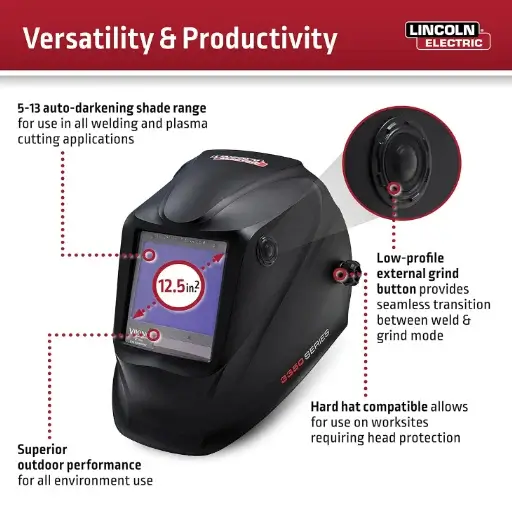
Key Features & Technical Specifications:
- Industry-Leading 4C Lens Technology: Eliminates color saturation and lime-green tinting.
This creates a crystal-clear, true-color view of the base material, electric arc, and welding puddle. - Perfect 1/1/1/1 Optical Clarity: This premium rating guarantees zero blurriness, zero distortion, and complete shade consistency from any viewing angle.
- Extra-Large Viewing Area: Features a massive 12.5 square inch auto-darkening lens that significantly increases operator control and peripheral situational awareness.
- All-Day Comfort (X6 Headgear): Equipped with the innovative X6 Headgear system which evenly distributes weight across the head.
It reduces pressure points and customizes balance using an easy-to-use ratchet knob (fits hat sizes 6.5 to 8). - Long-Term Reliability: Backed by an industry-leading 5-year hassle-free warranty, making it a highly secure financial investment for professional welders.
Lincoln Electric’s Quick Pros & Cons: Welding Helmet vs. Flip-Up Face Shield
| ✅ Pros | ❌ Cons |
|---|---|
| Flawless 1/1/1/1 true-color optical clarity | Premium price point ($421.04 for Matte Black) |
| Massive 12.5 sq. in. viewing field | Heavier and bulkier than simple torch goggles |
| External grind button for fast transitions | Requires battery/solar power for the LCD lens |
KwikSafety EAGLE EYES Welding Goggles (Charlotte, NC): Replacing a Welding Helmet vs. Flip-Up Face Shield Setup
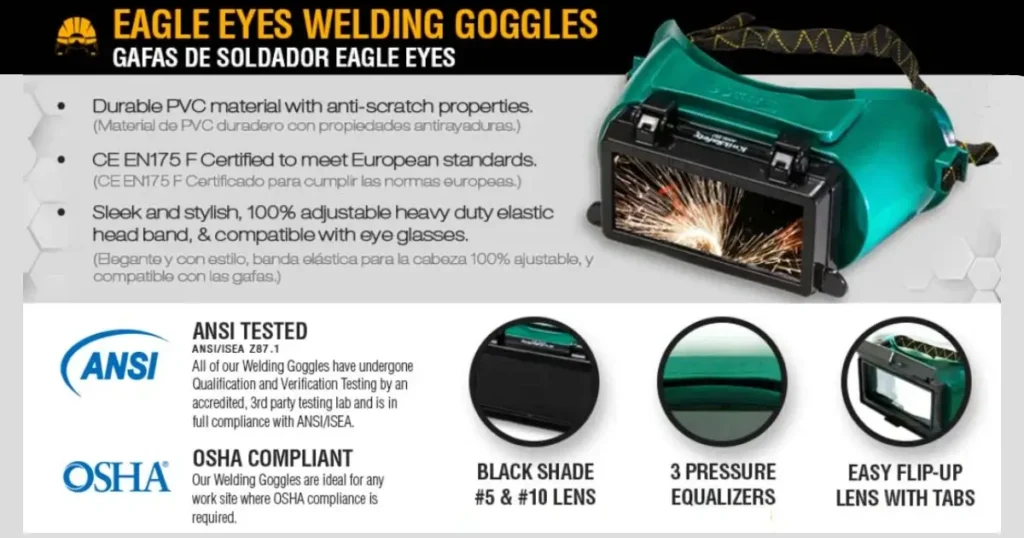
If a traditional heavy welding helmet and flip-up face shield setup feels too bulky for standard torch cutting tasks, specialized protective goggles offer the ultimate portable solution.
Designed by safety experts in Charlotte, NC, the KwikSafety EAGLE EYES goggles provide high-quality facial and eye protection without the extra weight.
Key Features & Technical Specifications:
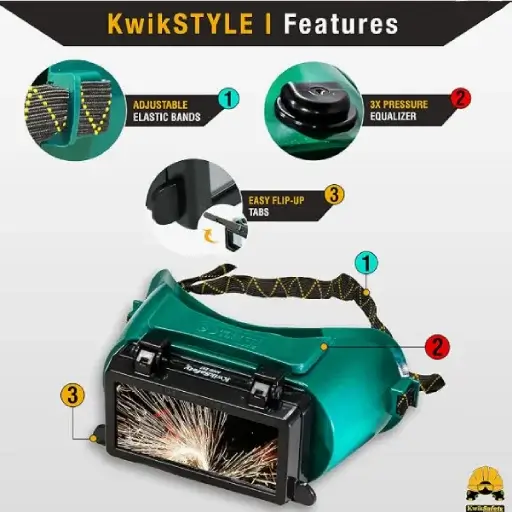
- Equipped with a primary Shade #5 infrared lens, this system is perfectly rated for oxy-fuel welding, torch brazing, and light plasma cutting.
It also includes a free interchangeable Shade #10 lens for higher-intensity tasks. - The durable PVC frame is engineered with 6 pressure-equalizing ventilation ports (top and bottom) that maximize air flow and completely prevent fogging. Crafted in Charlotte, this system features a front-loading shaded lens that easily flips up, allowing operators to quickly transition to grinding or clear material inspections.
- It serves as an excellent alternative when evaluating a standard welding helmet vs. flip-up face shield option, comfortably accommodating regular, medium-sized prescription eyeglasses underneath.
It is fully ANSI-tested and OSHA-compliant to ensure maximum safety against UV/IR radiation, flying sparks, and debris.
If you are also working on residential plumbing, don’t forget to check out our top recommendations for the best welding safety goggles for home piping.
Charlotte’s Pros & Cons: Welding Helmet vs. Flip-Up Face Shield
| ✅ Pros | ❌ Cons |
|---|---|
| Ultra-lightweight and highly budget-friendly ($25.70) | Not suitable for high-amperage TIG/MIG arc welding |
| Anti-fogging frame fits over prescription glasses | Leaves the upper forehead and neck exposed |
| Quick flip-up front for 180° unshaded viewing | Lenses require manual cleaning with a damp cloth |
Head-to-Head Comparison: Lincoln Electric VIKING 3350 vs. KwikSafety EAGLE EYES
| Feature | Lincoln Electric K3034-4 VIKING 3350 | KwikSafety EAGLE EYES |
|---|---|---|
| Product Type | Auto-darkening welding helmet | Flip-up welding goggles |
| Best For | Electric arc welding (MIG, TIG, Stick) | Gas/oxy-fuel welding & torch cutting |
| Shade Range | Variable DIN 5–13 (Auto-switching) | Fixed Shade 5 (Includes free Shade 10) |
| Lens Optics | 4C LCD lens, 1/1/1/1 optical clarity | Static IR-filter, anti-fog coating |
| Viewing Area | 12.5 sq. in. (3.74 x 3.34 in.) | 180° peripheral view |
| Face Coverage | Full face, neck, and head protection | Eyes only (No upper face/neck shield) |
| Arc Sensors | 4 independent optical sensors | N/A (Passive/manual flip system) |
| Headgear | X6 weight-distributing ratchet system | Adjustable heavy-duty elastic band |
| Material | High-impact nylon shell | Flexible Polyvinyl Chloride (PVC) |
| Weight | 1.41 lbs (25.8 oz) | Ultra-lightweight 6.6 oz |
| Portability | Full helmet size, requires bag storage | Compact, fits over prescription glasses |
| Standards | ANSI Z87.1 Approved | 5-Year Warranty | ANSI Z87.1 tested | OSHA compliant |
| Amazon Price | $421.04 | $25.70 |
Key Takeaways for Your Shop Setup: Welding Helmet vs. Flip-Up Face Shield
- The VIKING 3350 is engineered for high-amperage electric arc processes where intense UV/IR radiation and heavy spatter demand heavy-duty face coverage.
- The EAGLE EYES goggles are ideal for lower-intensity gas or oxy-fuel work. They are lighter and highly practical, but offer no facial skin protection.
- When evaluating a welding helmet vs. flip-up face shield or goggle setup, remember that Shade 5 is standard for gas torch operations, while the included Shade 10 backup lens extends the goggles’ utility to basic plasma cutting.
Long-Term Cost & Maintenance: Welding Helmet vs. Flip-Up Face Shield Care for Your Lincoln VIKING 3350
Buying a premium auto-darkening welding helmet is just the first step. To maintain proper protection and extend the lifespan of your Lincoln Electric VIKING 3350, you need to budget for annual cleaning supplies and specific replacement lenses.
Below is a detailed breakdown of what it costs to keep this specific equipment running efficiently.
Annual Cost Breakdown: Cleaning & Replacement Lenses
| Maintenance Item | Budget Setup (Annual Cost) | Professional Setup (Annual Cost) |
|---|---|---|
| Cleaning Supplies | Magic Fiber 6-pack (~$10/yr) | ZEISS Kit & Anti-Fog Spray (~$50–75/yr) |
| Replacement Lenses | Aftermarket 20-pack (~$32–48/yr) | Lincoln OEM Inner & Outer Lenses (~$68–132/yr) |
| Total Annual Investment | ~$48–66 / year | ~$118–207 / year |
Lens Replacement Options & Real Costs
| Lens Option | Cost per Pack | Packs per Year (Avg) | Total Annual Cost |
|---|---|---|---|
| Aftermarket 20-Pack (10 Outer + 10 Inner) | $15.99 | 2–3 packs | ~$32–48/yr |
| Lincoln OEM Outer (KP2898-1) | ~$12–15 (5-pack) | 4–6 packs | ~$48–90/yr |
| Lincoln OEM Inner (KP3044-1) | ~$10–14 (5-pack) | 2–3 packs | ~$20–42/yr |
To save money and avoid fitment headaches, we highly recommend a hybrid approach:
- Buy Aftermarket Outer Lenses: They fit perfectly and offer massive savings.
- Stick to Lincoln OEM Inner Lenses (KP3044-1): This guarantees a flawless fit and clear visibility.
- The Result: This hybrid strategy cuts your annual lens cost to roughly ~$40–65/yr while keeping your workflow smooth.
How to Clean Welding Lenses Properly -Complete Guide
Daily Cleaning (Between Welds):
- Soft, lint-free cloth: Microfiber or clean cotton (never paper towels – they scratch).
- Gentle circular motion from center outward.
- Cool dry air: Let lenses air-dry, never use compressed air (it can trap moisture inside).
- Avoid touching the lens surface with bare hands (oils cause spots).
Removing Spatter & Buildup:
- Soft brass or plastic brush: Gently scrape away hardened spatter at a 45° angle.
- Never use steel tools: they will scratch polycarbonate permanently:
- Mild soap + warm water: For stubborn residue, rinse, then dry with a soft cloth.
What NOT to Do:
❌ Do not use acetone, alcohol, or harsh chemicals (dissolves polycarbonate).
❌ Never wipe with dry cloth on hot lenses (thermal stress = cracks).
❌ Do not clean with metallic brushes or abrasive pads.
❌ Do not store in direct sunlight (causes yellowing/degradation).
❌ Do not expose to extreme temperature changes.
Conclusion: Final Verdict on Welding Helmet vs. Flip-Up Face Shield Gear
Ultimately, your choice between a full-coverage welding helmet vs. flip-up face shield or goggle setup comes down to the source of heat and radiation in your workshop.
For high-intensity electric arc processes, investing in a premium auto-darkening helmet like the Lincoln Electric VIKING 3350 is mandatory to protect your eyes and skin from severe UV/IR burns.
Conversely, for lightweight, portable gas operations, oxy-fuel cutting, or torch brazing, the KwikSafety EAGLE EYES goggles offer the perfect, budget-friendly comfort without unnecessary bulk.
Focus on your specific welding methods, stay compliant with ANSI and OSHA standards, and always prioritize the right level of protection for your eyes.